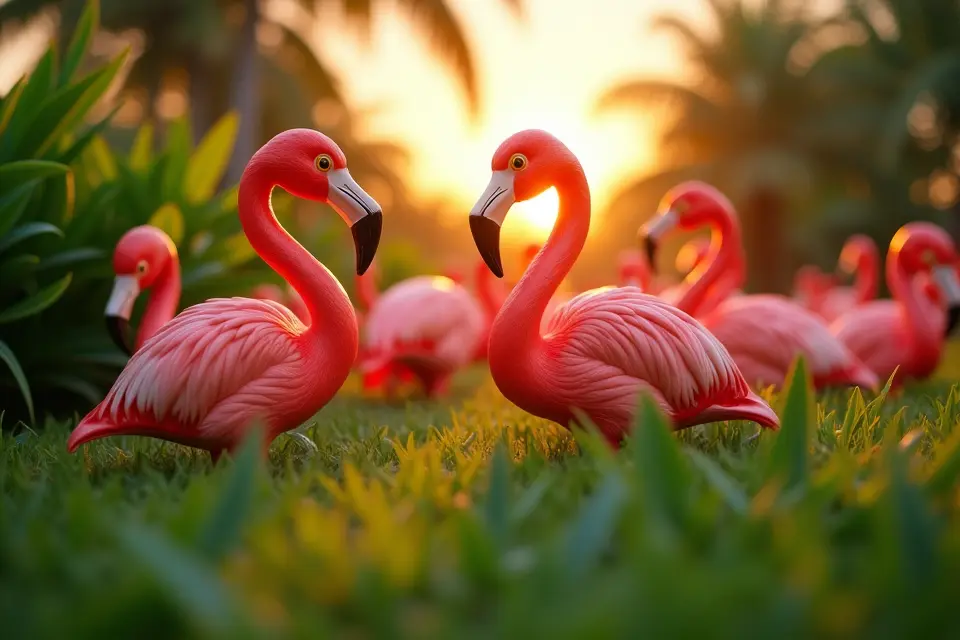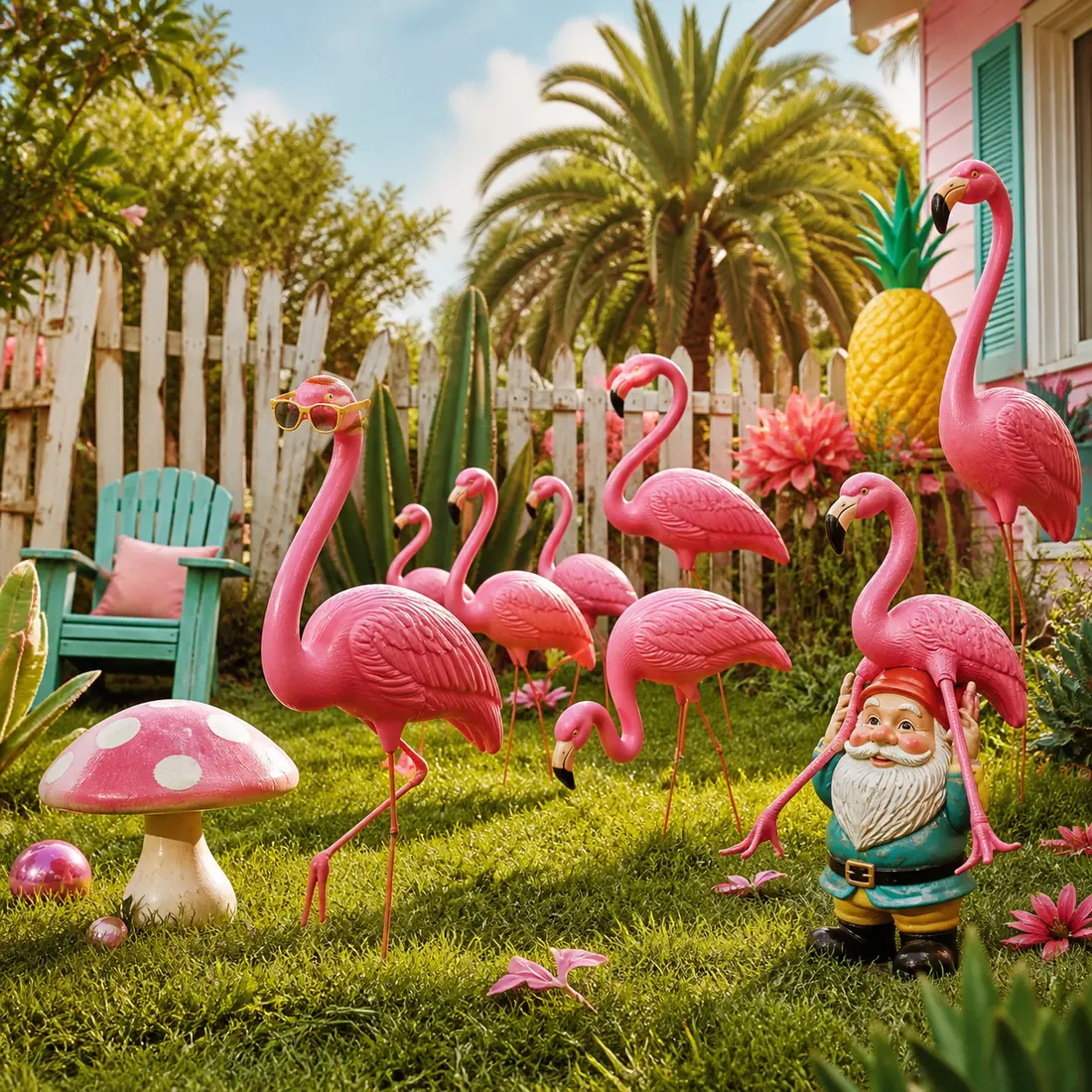
A plastic flamingo is basically a hollow, lightweight sail balanced on two thin wires. Of course it falls over. The good news is that keeping one upright costs almost nothing and takes about two minutes per bird, once you know what is actually knocking it down.
There are four usual suspects: the soil is too loose to grip the legs, too hard to get them deep enough, the wind is catching the body, or the legs themselves have come loose from the bird. Work out which one you have, then use the fix below.
Why lawn flamingos fall over
Shallow legs. Most birds get pushed in an inch or two and called done. The legs need to be buried deep enough that the soil, not the bird’s balance, is doing the holding. As a rough rule, more leg in the ground than you think is reasonable.
Loose soil. Sandy soil, which is a lot of Florida, drains fast and shifts. Legs that are snug on Monday wobble by Friday, especially after rain.
The sail effect. The body is hollow and broad from the side. A gust hitting it side-on has a lot to push against and two skinny levers to push on.
Wobbly sockets. On older birds the legs work loose where they enter the body. The legs stay planted and the bird spins or tips on top of them.
Getting the legs in: sand, clay and everything between
Hard or clay soil: do not force it. Bending the legs is the fastest way to a permanently tilted bird. Water the spot first to soften it, then make a pilot hole with a long screwdriver, a big nail, or a thin piece of rebar, and slide the leg in. Make the holes at the same spacing as the legs, and push straight down.
Sandy soil: depth is everything. Push legs in as far as they will go, and if the bird still leans, the legs are too short for your ground. Longer replacement legs are cheap and are the single best upgrade for a sandy yard.
Mulch beds: mulch looks like soil and holds like nothing. Push through the mulch into the dirt underneath, or the bird is just standing on wood chips.
Lawns: grass roots actually help. Set the bird in the turf rather than at the bare edge of a bed, where the soil tends to be looser.
Wind-proofing a flock
Turn the narrow side into the wind. Most yards have a prevailing breeze. Face the birds so their beak or tail points into it, not their broad side. It changes how much the body catches more than anything else on this list.
Add a third leg nobody can see. Push a thin garden stake or a length of stiff wire into the ground behind the bird, then fasten it to the body or a leg with a dark zip tie or garden wire. From the street it is invisible; in a gust, it is the difference between standing and lying down.
Group them. A flock planted close together, partly sheltered by shrubs or a fence, gets less direct wind than one brave bird in the middle of an open lawn.
Upgrade the problem spot. If one corner of the yard is a wind tunnel, a metal flamingo with a heavier stake, or a weighted statue, will do better there than plastic ever will.
Fixing loose legs and wobbly birds
If the bird twists on its legs, the socket has worn. Pull the leg, wrap the top inch with a few turns of outdoor tape to thicken it, and push it back in snug. A dab of outdoor-rated adhesive makes it permanent, if you never plan to take the bird apart for storage.
Bent legs can be straightened by hand a few times, but metal fatigue is real. Once a leg has been bent back and forth repeatedly, replace it. Rusted legs stain the bird and snap without warning; galvanized or coated replacements fix both problems.
Mowing day, storm season and the off-season
Mowing: move the flock before the mower comes out. String trimmers chew through plastic legs and mower decks launch flamingos with real force. If you have a lot of birds, plant them in beds rather than open turf and mowing day gets much easier.
Storms: Atlantic hurricane season runs from June 1 to November 30. When a named storm is coming, bring the flock in with the patio furniture and everything else that can blow around. A plastic bird is light, but at storm wind speeds anything loose becomes debris. That goes for statues, chimes, and spinners too.
Off-season: up north, pull birds before the ground freezes; frozen soil grips legs hard and plastic gets brittle in the cold. Store them out of the sun and they will look better for years (more on that in why lawn flamingos fade).
$ Budget-friendly
Replacement Flamingo Legs
The cheapest fix for leaning birds in sandy yards. Measure your sockets first.
Before you buy: Measure the leg sockets on your bird and the length you need before ordering. Longer, thicker legs hold better in sandy soil; galvanized or coated steel resists rust.
Shop this idea on Amazon ↗$$ Mid-range
Metal Flamingo Garden Statue
Heavier and better anchored than plastic, for the windy corner of the yard.
Before you buy: Look at the finish (powder-coated or painted), the stake design, and the weight. Metal does not fade like plastic, but chipped paint on steel can rust near the coast, so a touch-up every season helps.
Shop this idea on Amazon ↗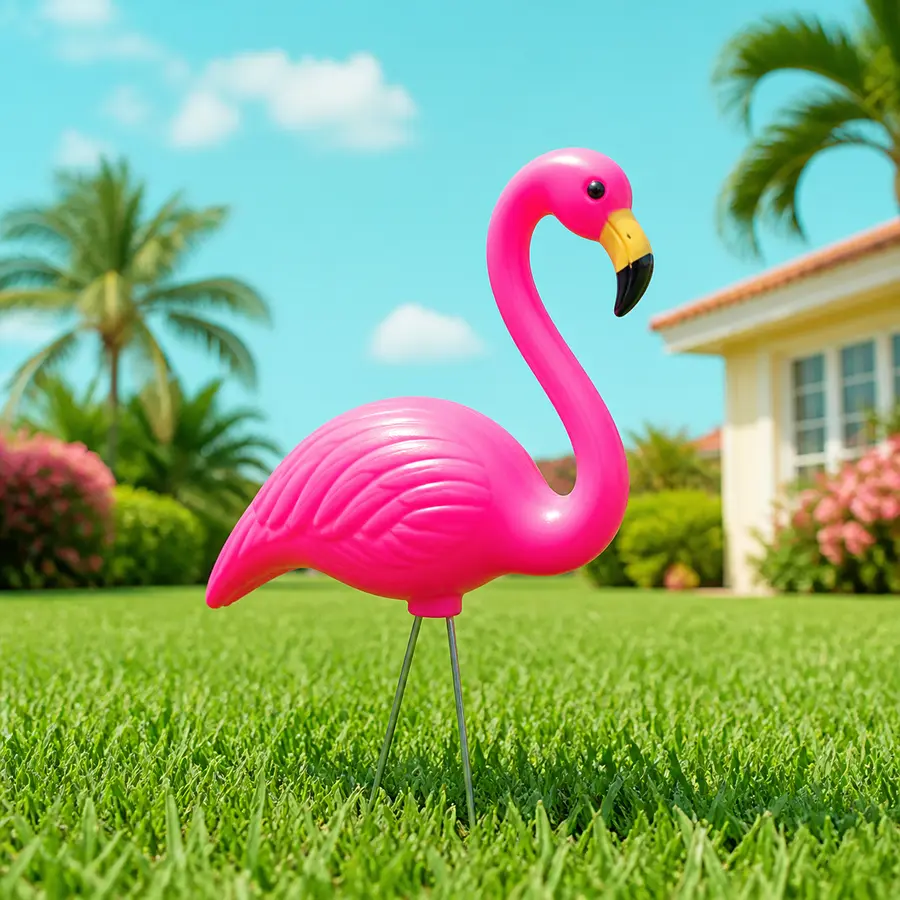
$ Budget-friendly
The Classic Yard Icon
If the old bird is past saving, start fresh, and plant it deep this time.
Before you buy: Check the listed height, stake material, and number of birds in the package. Softer ground makes installation easier; dense soil may need a pilot hole.
See it on Amazon ↗$$$ Splurge
Life-Size Flamingo Statue
One big, heavy bird for pool decks. Plan to bolt or weight it, and bring it in for storms.
Before you buy: Confirm the real height and base footprint, the material, and how it anchors. Big statues catch wind and are tempting to borrow, so plan to bolt, weight, or bring it in.
Shop this idea on Amazon ↗Questions people ask
How deep should lawn flamingo legs go?
As deep as you can get them without bending the legs. In sandy soil, push them all the way and consider longer replacement legs. In hard soil, make a pilot hole first.
How do I keep plastic flamingos from blowing over?
Plant the legs deeper, turn the bird’s narrow side toward the prevailing wind, and add a hidden support stake behind it fastened with a dark zip tie. Group birds in sheltered spots rather than in the open.
Should I bring lawn flamingos in for a hurricane?
Yes. Bring in all loose yard decor before a named storm, along with patio furniture and anything else that can blow around.
How we pick: we choose products for fit, usefulness, and how much flamingo they deliver, then link to Amazon so you can see current prices, reviews, and availability. We have not hands-on tested every item, and we do not invent prices or reviews. More about us.